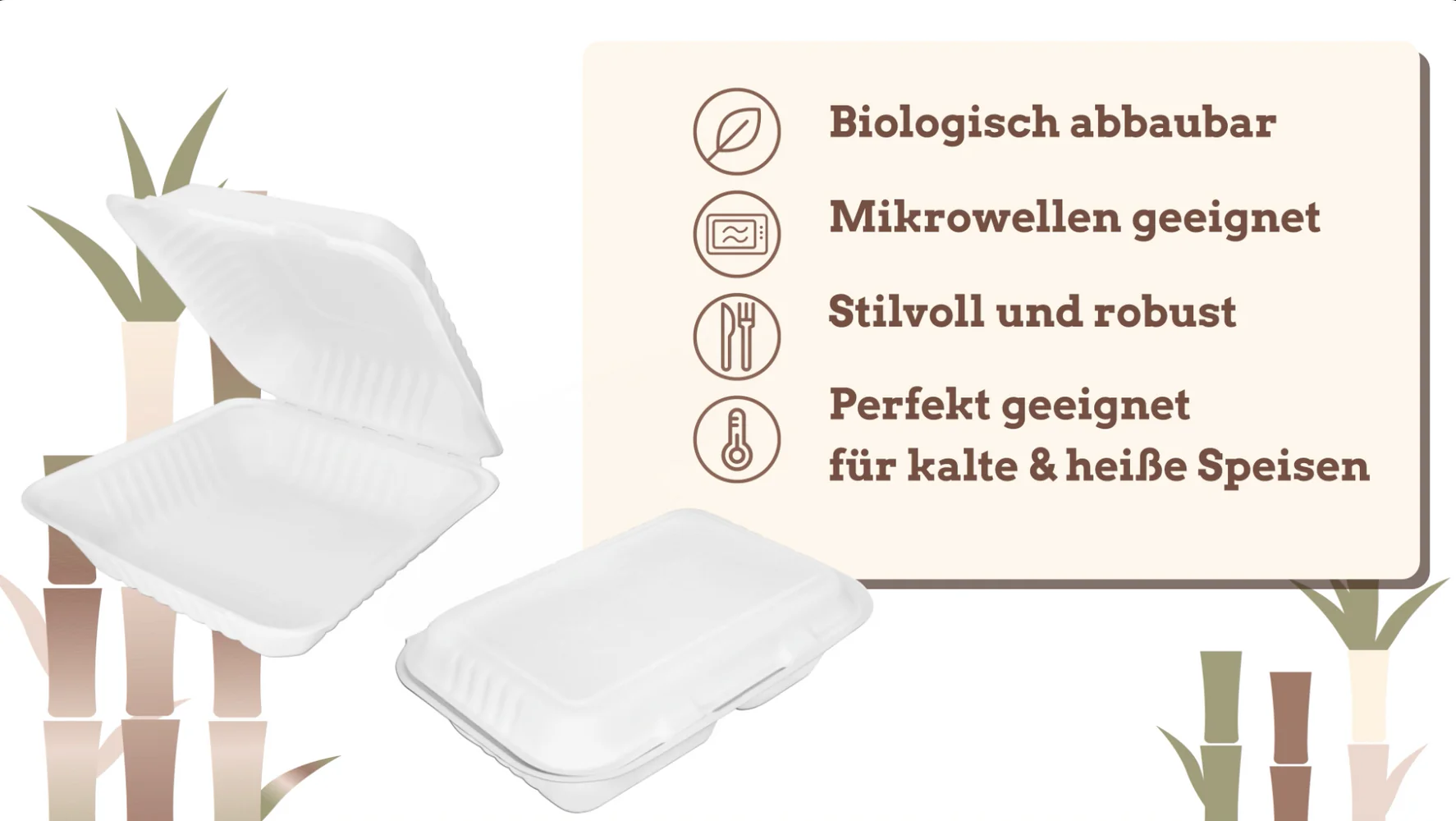
Our disposable tableware is made from sugar cane fibers. These are mixed with water to a pulp and dried in molds, resulting in practical disposable products. Thanks to the innovative production, the bagasse plates are free of plastic and pollutants. They are more stable than paper plates and more sustainable than disposable plastic plates. Our disposable sugar cane crockery is ideal for cold and warm dishes such as pasta, grilled food or salads. The sugar cane plates are perfect as disposable dinner plates for restaurants, cafés, bakeries, snack bars, gastronomy or larger events. Stackable, light and robust! Since the party plates are a purely natural product and biodegradable, they can be composted after use. This is how sustainability works!
material
bagasse / sugar cane fibers
Size
26 cm
number of pieces
50 pieces per unit
Warme und kalte Speisen
Frequently Asked Questions
Our sugar cane tableware, made from bagasse, has a number of advantages. It is resistant to fat, moisture and acid, harmless to health and tasteless. It is freezer-safe down to -15°C, microwave-safe and oven-safe, offering maximum versatility. The tableware can be closed with lids and can even be customized with prints.
The key advantage of our disposable products made from sugar cane is their sustainability. By using only by-products from other manufacturing processes, these products can be manufactured in a way that is extremely resource-efficient. Another significant advantage is that they are completely biodegradable, meaning that they can easily be returned to the natural cycle after use. This ecological approach not only ensures minimal environmental impact, but also supports the responsible use of natural resources.
Packaging and tableware made from bagasse are completely biodegradable. Environmentally friendly disposal is recommended via the organic waste bin, as products made from bagasse are biodegradable under normal environmental conditions in Germany, but this can take some time. Faster decomposition is possible using conventional methods in composting plants, which significantly accelerate the decomposition process.